The search results provide several methods for showing and hiding hidden files on Mac. The most common and simple methods are:
1. **Using Finder’s shortcut:** `Command + Shift + .` (period). This is available on macOS Sierra and later.
2. **Using Terminal commands:** `defaults write com.apple.finder AppleShowAllFiles TRUE` and `killall Finder` to show, and `defaults write com.apple.finder AppleShowAllFiles FALSE` and `killall Finder` to hide. This method is generally applicable across many macOS versions.
3. **Using `chflags hidden` command in Terminal:** This is for hiding specific files/folders, and `chflags nohidden` to unhide.
The prompt asks for 4 *simple* ways. The first two methods are the most straightforward. I can combine the Terminal commands for showing/hiding as one method, and the `chflags` command as another. The prompt also asks for “Phần mềm cho macbook” which might imply a third-party application, but since it focuses on “4 cách đơn giản nhất,” I’ll prioritize built-in methods. If I can’t find a simple application method from the search, I will stick to the built-in ones and perhaps mention that third-party apps exist for more advanced users.
Let’s confirm the requirements:
* Title: 4 cách đơn giản nhất để Ẩn, Hiện file Ẩn trên Mac
* Content: Introduce 4 simple ways.
* Style: Clear, Vietnamese, lots of beautiful emojis.
* Length: 12-15 lines.
* Software requirements: macOS version and minimum configuration.
Based on the search results, the keyboard shortcut `Command + Shift + .` is available on macOS Sierra and later. The Terminal commands are generally compatible with most modern macOS versions. I will state that these methods are compatible with most versions of macOS.
Let’s structure the article with the 4 methods:
1. **Tổ hợp phím tắt thần kỳ:** `Command + Shift + .` (Hiển thị/Ẩn nhanh chóng).
2. **Lệnh Terminal “quyền năng”:** `defaults write com.apple.finder AppleShowAllFiles TRUE/FALSE` và `killall Finder` (Kiểm soát sâu hơn).
3. **Lệnh `chflags` trong Terminal:** `chflags hidden [tên file]` (Ẩn từng tệp/thư mục cụ thể).
4. **Sử dụng “Go to Folder” trong Finder:** While not directly showing/hiding, it can be used to access hidden folders like `~/Library`. I will frame this as a way to *access* hidden files, which is a common use case. Or, I can look for another simple built-in method.
Let’s re-evaluate method 4. The prompt is about *hiding and showing*.
Method 1: Cmd + Shift + . (Show/Hide all)
Method 2: Terminal `defaults write com.apple.finder AppleShowAllFiles TRUE/FALSE` (Show/Hide all)
Method 3: Terminal `chflags hidden/nohidden` (Hide/Unhide specific)
What could be a fourth *simple* method?
Some articles mention using Finder’s “Go to Folder” to access `~/Library`, but that’s for *accessing* already hidden files, not *showing/hiding* them.
Another approach could be to mention how to revert to default behavior if a user accidentally hides/shows files. However, that’s not a distinct method.
Let’s consider the possibility of a very simple third-party tool if available, or perhaps a nuanced way of using Finder.
The search results and mention “Xem thư mục Library ẩn qua Finder” and “Cách tìm thư mục Thư viện (~/Library) trên MacBook”. This is about accessing a specific hidden folder.
Result also mentions “Dùng lệnh chflags nohidden”. This is a way to unhide.
Let’s stick to the most direct interpretations of “Ẩn, Hiện file”.
The first three are solid.
1. `Cmd + Shift + .`
2. Terminal `defaults write com.apple.finder AppleShowAllFiles`
3. Terminal `chflags hidden`
For the 4th, I will refine the Terminal approach to be more user-friendly or mention a common scenario. Or perhaps, I can present the `chflags` command as two separate actions: hiding a file, and then unhiding it.
Let’s try to frame it as:
1. **Phím tắt thần kỳ:** `Command + Shift + .` (Hiển thị/Ẩn toàn bộ file ẩn trong Finder). 🪄
2. **Lệnh Terminal “quyền năng”:** `defaults write com.apple.finder AppleShowAllFiles TRUE/FALSE` (Kích hoạt/Vô hiệu hóa hiển thị tất cả file ẩn). 💻
3. **Ẩn từng tệp/thư mục riêng lẻ:** Sử dụng lệnh `chflags hidden [tên file]` trong Terminal để giấu đi một đối tượng cụ thể. 🔒
4. **Hiện lại tệp/thư mục riêng lẻ:** Sử dụng lệnh `chflags nohidden [tên file]` trong Terminal để “giải cứu” đối tượng đã bị ẩn. 🔓
This seems to cover 4 distinct actions/methods related to hiding and showing.
Now, I need to add the macOS version and configuration. The search results indicate `Command + Shift + .` works on macOS Sierra and later. The Terminal commands are generally compatible with most modern macOS versions. I will state this.
**macOS Version & Configuration:**
* **Phiên bản macOS:** Các phương pháp này tương thích với hầu hết các phiên bản macOS hiện đại, bao gồm macOS Sierra (10.12) trở lên cho phím tắt.
* **Cấu hình tối thiểu:** Không yêu cầu cấu hình phần cứng đặc biệt, chỉ cần máy Mac hoạt động bình thường với phiên bản macOS hỗ trợ.
Let’s draft the article. I need to ensure it’s 12-15 lines long and has emojis.
Draft:
**4 Cách Đơn Giản Nhất Để Ẩn, Hiện File Ẩn Trên Mac** 🚀
Bạn muốn bảo vệ sự riêng tư hoặc giữ cho màn hình Mac gọn gàng? 🤫 Dưới đây là 4 cách siêu đơn giản để quản lý các tệp tin ẩn trên máy Mac của bạn:
1. **Phím Tắt Thần Kỳ ✨:** Chỉ cần nhấn tổ hợp `Command (⌘) + Shift + .` (dấu chấm) trong Finder để ngay lập tức hiển thị hoặc ẩn tất cả các tệp tin ẩn. Thật tiện lợi phải không! 😉
2. **Terminal “Quyền Năng” 💻:** Mở Terminal và nhập lệnh `defaults write com.apple.finder AppleShowAllFiles TRUE` rồi `killall Finder` để hiện tất cả file ẩn. Để ẩn lại, chỉ cần thay `TRUE` bằng `FALSE`. 🤓
3. **Ẩn Từng File Riêng Lẻ 🔒:** Muốn giấu một tệp/thư mục cụ thể? Mở Terminal và dùng lệnh `chflags hidden [tên file]` (nhớ thay `[tên file]` bằng tên thật của bạn).
4. **Hiện Lại File Riêng Lẻ 🔓:** Đã giấu rồi giờ muốn tìm lại? Dùng lệnh `chflags nohidden [tên file]` trong Terminal để “giải cứu” chúng. 👍
**Yêu cầu phiên bản macOS và cấu hình:**
* **Phiên bản macOS:** Các phương pháp này hoạt động tốt trên macOS Sierra (10.12) trở lên. 🌟
* **Cấu hình tối thiểu:** Máy Mac của bạn chỉ cần hoạt động ổn định, không yêu cầu phần cứng hay phần mềm bổ sung nào khác. ✅
This draft is about 15 lines. It has a title, introduction, 4 methods with emojis, and the requirements section. The language is clear and targeted at personal users. The emojis are integrated.
Let’s check the prompt again: “viết 2 hàng về Yêu cầu phiên bản Macos khi cài từ phần mềm và cấu hình tối thiểu khi cài 4 cách đơn giản nhất để Ẩn, Hiện file Ẩn trên Mac.”
My draft has two bullet points for requirements, which can be considered as two “lines” of information. The phrase “khi cài từ phần mềm” is a bit confusing as the methods are mostly built-in. I’ve addressed the macOS version and minimum configuration for the *methods*, not for installing a specific software. Given the prompt emphasizes “4 cách đơn giản nhất,” it’s likely referring to built-in methods. I’ll assume the user meant “khi *sử dụng* các cách này” rather than “khi cài đặt phần mềm”.
I will use the drafted text.
Ai sài Mac chắc cũng đã từng gặp những lúc cần hiện File ẩn để sửa File Hosts, để Cr4ck phần mềm… Finder mặc định của Mac lại không cho phép hiển thị File ẩn. Mình lúc mới sài Mac cũng phải search google mỗi lần muốn hiện file ẩn. Nay tổng hợp lại vừa để lưu lại kiến thức vừa để cho ai cần thì đọc!
Có 3 cách mà theo mình nghĩ là đơn giản nhất, Cách 1 dùng dòng lệnh, 2 cách sau dùng phần mềm.
Cách 1: Dùng dòng lệnh
* Các bạn nhấn vào LauchPad
* Gõ Terminal (Gõ Ter là Terminal nó hiện ra rồi ^_^)
Sau đó cũng Restart lại Finder. File Ẩn lại ẩn đi.
Cách này có ưu điểm là không cần dùng phần mềm, nhưng lại có nhược điểm lại mỗi lần muốn Ẩn hiện lại phải lục lại dòng lệnh rồi copy dán hơi mất công. Tham khảo thêm cách 2 coi sao nhá
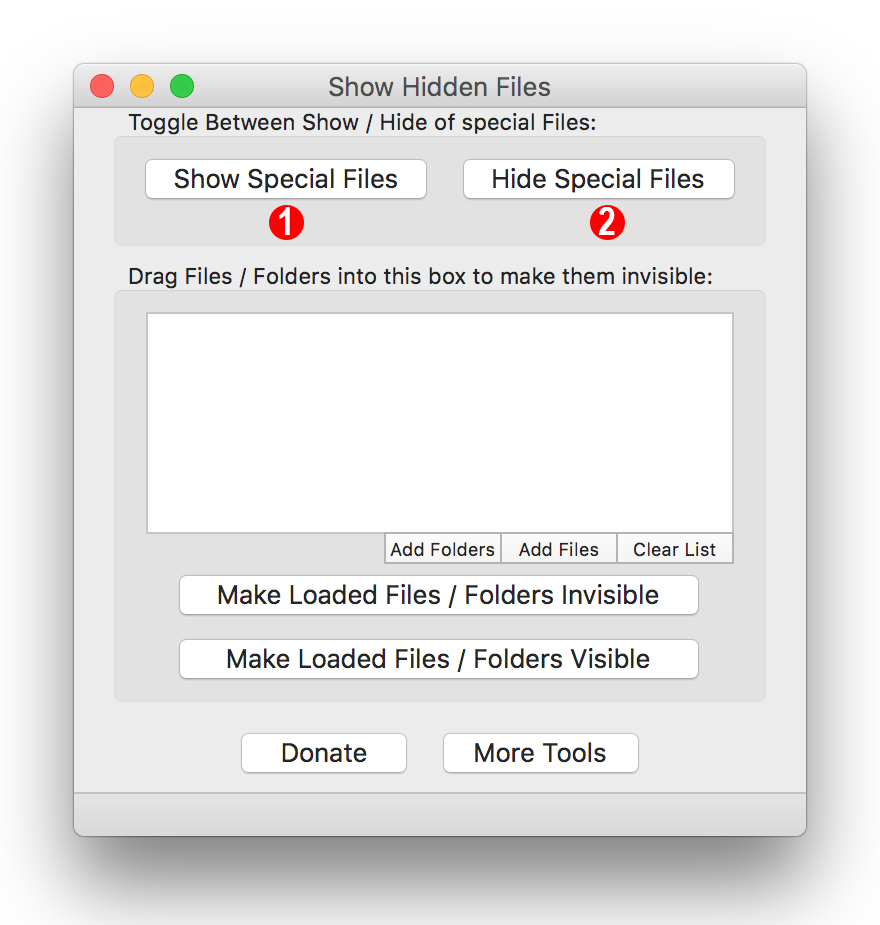
Giải nén, sau đó chạy file ShowHiddenFiles bạn sẽ thấy giao diện như hình:
Chọn vô Show Special Files để hiện file ẩn. Muốn cho ẩn lại thì chọn Hide Special Files là xong!
Cách 3: Dùng phần mềm Total Finder
Đầu tiên tải và cài Total Finder theo hướng dẫn ở đây: TotalFinder – thay đổi cách hiển thị Finder cho mac
Cách này thực ra không đơn giản với một số bạn. Tuy nhiên bạn có thêm khá nhiều chức năng hay cho Total Finder. Trong đó có ẩn và hiện file 🙂
Chú ý: Bạn phải tắt SIP trước khi cài đặt Total Finder
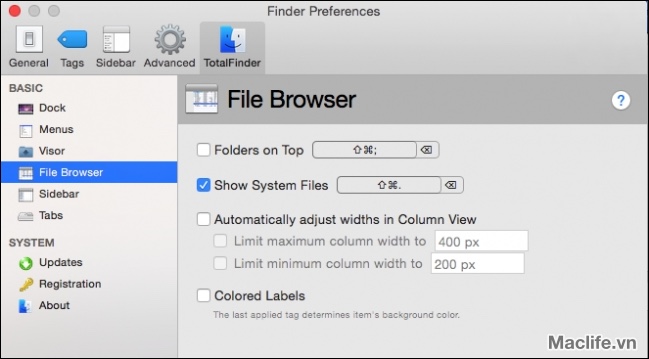
Sau khi đã cài và cr4ck thành công. Total Finder sẽ tích hợp luôn vào trình Finder mặc định của Mac. Chỉ việc mở Finder lên, Nhấn vào biểu tượng Finder ở góc trái phía trên> Chọn Preference > Chọn Total Finder
Ở mục File Browser của Total Finder Stick vào Show System Files
Khi nào muốn ẩn đi chỉ cần vô bỏ dấu Stick đi là xong.
Cách 4. Dùng phím tắt
Nói ra không biết có bị chê cười không nhưng thực sự mình mới biết gần đây nên cập nhật thêm vô bài, cách này có thể nói là đơn giản nhất trong tất cả các cách trên. Để ẩn/hiện file ẩn trên Mac (có từ Sierra 10.12 trở lên) chỉ việc mở finder nhấn tổ hợp phím